
Reverse Osmosis Window Cleaning Systems
Showing all 4 results
-
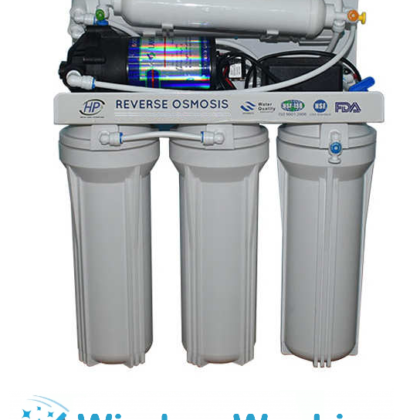
75 GPD Reverse Osmosis System
R4360,00 -
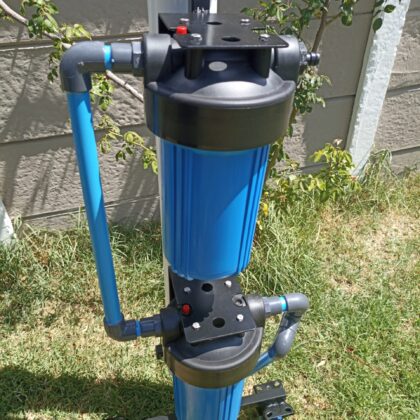
Reverse Osmosis Water Trolley System
R17050,00 -
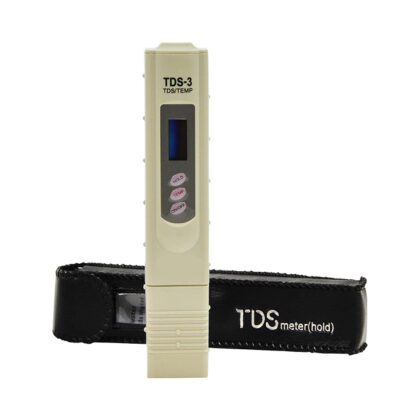
TDS Meter
R290,00 -
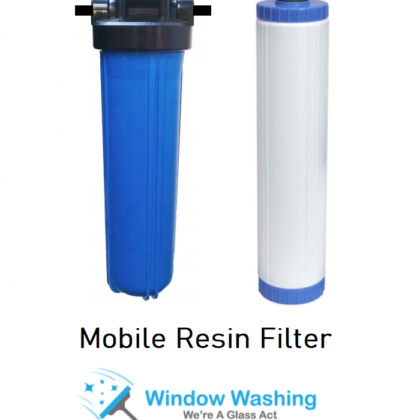
Waterfed Pole Deionized Water Supply
R3500,00
A reverse osmosis window cleaning system strips the dissolved minerals out of tap water so it dries on glass leaving nothing behind. South African municipal water typically carries between 100 and 400 parts per million of dissolved minerals, and every one of them stays on the pane when the water evaporates — that is the spotting and haze. Below roughly 10 ppm the water evaporates clean, which is the entire principle behind pole-fed cleaning.
Reverse osmosis window cleaning systems, trolleys and meters
- 75 GPD reverse osmosis system — R4,360, forces water through a membrane that rejects most dissolved solids
- Reverse osmosis water trolley — R17,050, filtration and transport in one unit for site work
- TDS meter — R290, reads parts per million directly so you know the water is actually pure
- Mobile deionised water supply — R3,500, resin that polishes what the membrane leaves behind
RO, resin, or both
Reverse osmosis handles volume cheaply and is where most cleaners start. Deionising resin polishes what the membrane leaves behind and is more expensive per litre, so it is usually used after RO rather than instead of it. On hard feed water, run RO first and resin second.
Measure it, do not assume it
A membrane or a resin bed gives no warning when it is spent — the water simply stops being pure, and the first sign is usually a customer complaint. A TDS meter costs R290 and turns that into a number you check before you start. Above about 20 ppm you will see marks on dark glass in sunlight.
The purified water goes up a waterfed pole. Background: what water do window cleaners use. Full range: window cleaning equipment.