
Professional window cleaners use purified water — water with almost all of its dissolved minerals removed, usually below 10 parts per million. It is produced on site by reverse osmosis, deionisation, or both. Ordinary municipal tap water in South Africa typically runs between 100 and 400 ppm, and every one of those parts is a mineral that stays behind on the glass when the water evaporates. That residue is what people see as spotting and streaking.
Why pure water dries without marks
Clean glass looks clean because nothing is left on it. Tap water carries calcium, magnesium, sodium and silica in solution; when the water evaporates the minerals do not, so they dry as a white haze. Strip them out and the water evaporates leaving nothing at all — which is why a pure water system needs no squeegee and no finishing cloth. The pane is left wet and allowed to dry.
It also makes the water mildly aggressive: pure water tries to return to equilibrium by dissolving whatever it touches, so it actively lifts dirt off the glass rather than just carrying it away.
Reverse osmosis, deionisation, or both
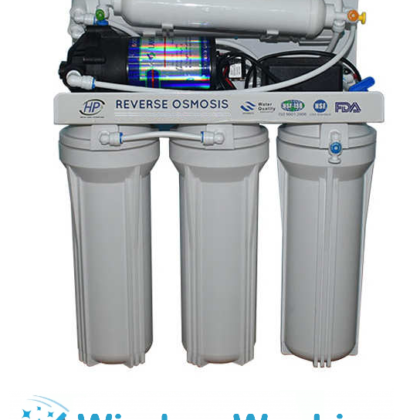
Reverse osmosis forces water through a membrane that rejects most dissolved solids. It is the cheaper way to handle volume and it is where most cleaners start — a 75 GPD reverse osmosis system costs R4,360.
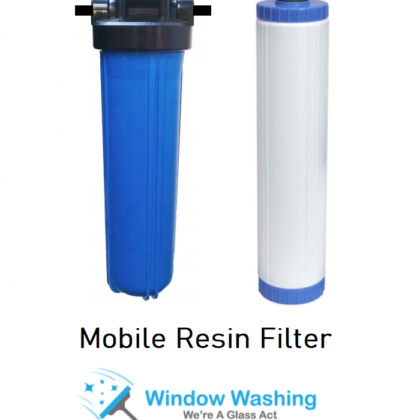
Deionisation passes water through a resin bed that swaps the remaining ions out. Resin is more expensive per litre and it exhausts, so it is usually used to polish RO output rather than to do the whole job. A mobile deionised water supply is R3,500.
On hard feed water the practical setup is RO first, resin second. On soft feed water resin alone can be enough.
How cleaners know the water is pure enough
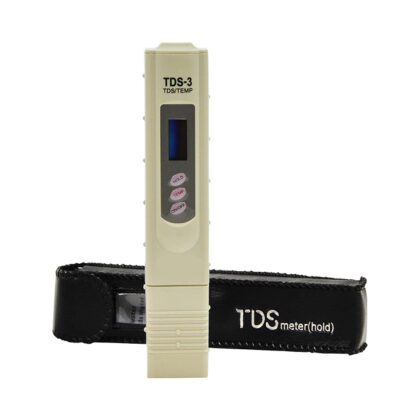
They measure it. A TDS meter at R290 reads total dissolved solids in ppm directly from the water. Under 10 ppm dries clear; above about 20 ppm you start seeing marks on dark glass in sunlight. Checking the reading also tells you when an RO membrane or a resin bed is spent, which is otherwise invisible until a customer complains.
Getting the water up to the glass
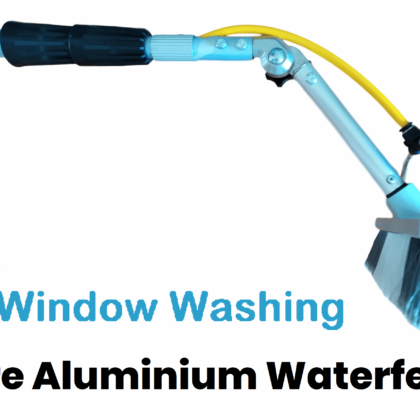
Purified water is fed through the shaft of a waterfed pole to a brush head at the top. That is the whole system: purify, pump, brush, walk away. Poles start at R5,170 for 6 metres in aluminium, and complete pole-and-water packages start at R14,560.
See the full window cleaning equipment range.