
Mix one part white vinegar to ten parts warm water, apply it to the glass with a washer or a cloth, and pull it off with a squeegee in a single stroke, wiping the blade between passes. Vinegar works because its acetic acid dissolves the mineral film and light grease that plain water leaves behind. It is a genuinely good solution for interior glass and small jobs — and it is not what professional window cleaners use, for reasons worth understanding before you scale it up.
The method
- Mix weak. One part white vinegar to ten parts warm water. Stronger is not better; it just smells worse and can mark timber and painted frames.
- Dust the frame first. Dry dirt in the corners turns into mud the moment it gets wet, and then it ends up on the glass.
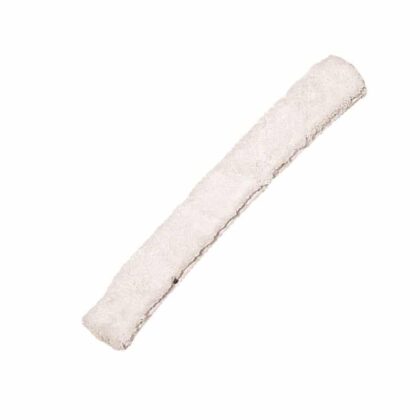
- Wet the whole pane. A washer sleeve at R150 holds far more solution than a cloth and lifts dirt instead of pushing it around.
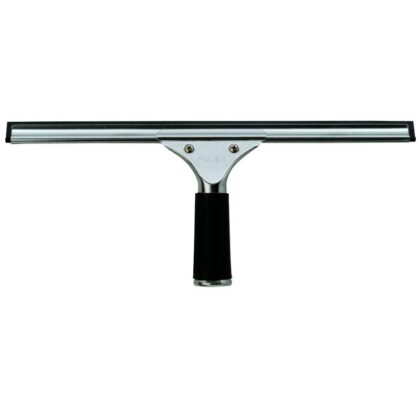
- Squeegee in one pass. Start at a top corner, pull steadily across, wipe the blade, overlap the previous stroke by a couple of centimetres. A 35cm squeegee is R390.
- Detail the edges. A dry microfibre cloth around the perimeter catches the bead the blade leaves.
When vinegar is the wrong tool
Three situations where it stops making sense:
- Tinted or coated glass. Acid attacks some films and coatings. Test an edge first, or use plain purified water.
- Natural stone sills and unsealed timber. Vinegar etches marble and travertine and lifts finish off bare wood.
- Anything you cannot reach to dry. Above single storey you cannot squeegee the pane, and vinegar solution left to dry on glass leaves its own residue.
What professionals use instead
Purified water with nothing added. Strip the dissolved minerals out of water — below 10 ppm — and it dries leaving nothing at all, which means no squeegee, no cloth, and no detailing. That is what makes ground-level cleaning of a double-storey house possible. The trade-off is equipment: a reverse osmosis system, a pump and a waterfed pole. See what water window cleaners use.
Streaks after using vinegar
Almost always one of three things: too much vinegar in the mix, a dirty squeegee blade being dragged back across clean glass, or direct sunlight drying the solution before you can pull it off. Work on the shaded side of the building and wipe the blade after every stroke. More on this in how to get streak free windows.
See the full window cleaning equipment range.